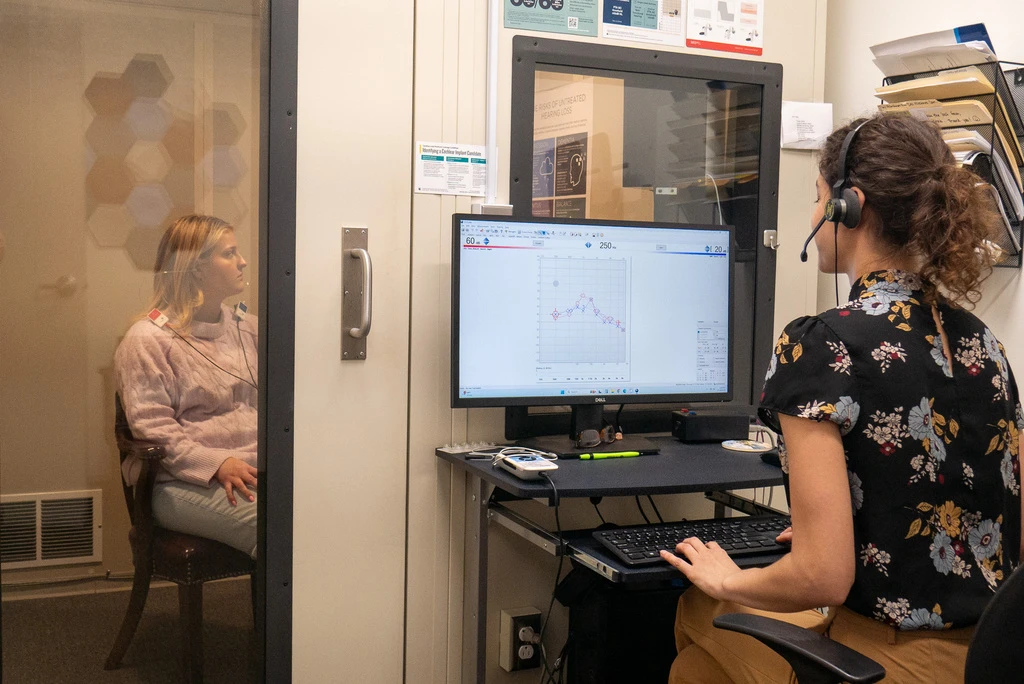
- Loud sound can affect hearing when the volume is high, the exposure lasts too long, or both happen together.
- Knowing common decibel levels can help you choose when to step away, turn sound down, or use hearing protection.
- Rose Audiology provides hearing protection, tinnitus care, and hearing evaluations in Chantilly, VA.
How Loud Is Too Loud?
Sound may be too loud when it makes conversation difficult, causes discomfort, leaves your ears ringing, or requires you to raise your voice to speak with someone nearby. A sound can also be too loud even if it does not hurt in the moment.
As a general guide, sounds around 70 dBA or lower are usually considered safer for long listening periods. Long or repeated exposure to around 85 dBA or higher can increase the risk of noise-related hearing loss. The louder the sound, the less time it may take to affect hearing.
The most important point is simple: hearing risk depends on volume and time.
Why Loud Sound Can Damage Hearing
Inside the inner ear are delicate sensory cells that help turn sound vibrations into signals the brain can understand. Loud sound can overstimulate these structures. Over time, or after a single intense exposure, this can contribute to permanent hearing changes.
Noise exposure can also aggravate tinnitus for some people. If your ears ring, buzz, or feel muffled after noise exposure, your ears may be telling you the sound was too loud.
Common Decibel Levels
Decibel levels vary by distance, setting, equipment, and measurement method, but these everyday examples can help you understand the scale:
- Whisper: about 30 dBA
- Refrigerator hum: about 40 to 50 dBA
- Normal conversation: about 60 to 70 dBA
- Busy traffic: about 70 to 85 dBA
- Hair dryer: about 80 to 90 dBA
- Lawn mower: about 80 to 100 dBA
- Motorcycle: about 90 to 100 dBA
- Sporting event: about 94 to 110 dBA
- Live concert: about 100 to 110 dBA or more
- Siren nearby: about 110 to 129 dBA
- Fireworks or firearms: often 140 dBA or higher
These numbers are estimates. The same activity can be safer or riskier depending on how close you are, how long you stay, and whether you use protection.
The 85 dBA Rule
Many hearing-safety guidelines use 85 dBA as an important threshold. Repeated or prolonged exposure at or above this level can increase the risk of hearing loss over time.
That does not mean 84 dBA is always safe or 86 dBA always causes damage. It means 85 dBA is a useful warning point. Once noise reaches that range, it is wise to think about:
- How long you will be exposed
- How close you are to the sound source
- Whether the sound is continuous or sudden
- Whether you already have tinnitus or hearing loss
- Whether ear protection is available
If you regularly work, perform, attend events, hunt, ride motorcycles, use power tools, or spend time in loud environments, hearing protection becomes more important.
Why Time Matters as Much as Volume
The louder the sound, the shorter the safer listening window becomes. A sound that is acceptable for a brief moment may not be safe for hours.
For example:
- A busy restaurant may not seem painful, but a long evening in loud noise can cause listening fatigue.
- A concert may be enjoyable, but standing near speakers for a full set can be risky.
- Power tools may be used in short bursts, but repeated exposure adds up.
- Firearms and fireworks can be intense enough to require protection even with brief exposure.
Noise exposure is cumulative. Your ears do not reset just because the sound was spread across a day, a week, or many years.
Signs a Sound May Be Too Loud
You do not need a decibel meter to notice warning signs. A sound may be too loud if:
- You need to shout to be heard by someone an arm’s length away.
- Your ears ring after the exposure.
- Sounds seem muffled afterward.
- Your ears feel full, pressured, or tired.
- You feel discomfort or pain.
- You turn up the TV or phone volume after being in noise.
- Speech sounds less clear after the event.
- Your tinnitus becomes louder after noise exposure.
If these symptoms happen often, a hearing evaluation can help determine whether noise has affected your hearing.
How Loud Is Too Loud for Earbuds and Headphones?
Earbuds and headphones can be risky because sound is delivered close to the ear. The exact level depends on the device, volume setting, fit, and background noise.
Listening may be too loud if:
- Someone nearby can hear your audio.
- You cannot hear normal conversation around you.
- You need to raise the volume in traffic, at the gym, or on a plane.
- Your ears ring or feel tired after listening.
- You use high volume for long periods.
Noise-canceling headphones can sometimes help because they reduce the urge to turn music up over background noise. They do not make high-volume listening safe by themselves.
How Loud Is Too Loud at Work?
Some work environments expose people to steady noise from machinery, tools, engines, or equipment. Others involve sudden impulse noise, such as firearms or impact tools.
Workplace sound may be too loud if:
- You must raise your voice to talk at a normal distance.
- Noise continues for much of the day.
- You notice ringing after work.
- Coworkers report hearing changes.
- Hearing protection is required or recommended on site.
- Annual hearing testing is part of workplace safety.
If you are exposed to occupational noise, follow workplace safety rules and use properly fitted protection.
How Loud Is Too Loud for Concerts and Music?
Music does not have to sound distorted or painful to be hazardous. Concerts, rehearsals, worship music, marching band, DJ events, and amplified performances can reach levels that become risky with time.
Musicians and frequent concertgoers should consider hearing protection that lowers volume while preserving sound quality. This is where musician earplugs can be helpful because they are designed to reduce sound more evenly than basic foam plugs.
When Should You Wear Hearing Protection?
Use hearing protection when sound is loud, sustained, or close to your ears.
Common situations include:
- Concerts and live music
- Rehearsals and performances
- Sporting events
- Hunting and shooting sports
- Power tools
- Lawn equipment
- Motorcycles
- Industrial or construction noise
- Fireworks
- Loud fitness classes
- Marching band or drumline
Foam earplugs may be useful for occasional noise exposure. Custom hearing protection may be better when comfort, fit, repeat use, or sound quality matters.
What Type of Hearing Protection Should You Use?
The best hearing protection depends on the setting.
Common options include:
- Foam earplugs for simple, disposable protection.
- Earmuffs for easy on-and-off use.
- Filtered earplugs for music and speech clarity.
- Custom earplugs for comfort and repeated use.
- Musician earplugs for performances, rehearsals, and concerts.
- Specialty protection for shooting sports or industrial sound.
Fit matters. A poorly inserted earplug may provide much less protection than expected.
What If Your Ears Ring After Loud Noise?
Temporary ringing after a loud sound can be a warning sign. It may fade, but repeated episodes should not be ignored.
After loud noise exposure:
- Give your ears quiet time.
- Avoid adding more loud sounds.
- Do not turn headphones up to cover ringing.
- Note whether symptoms improve.
- Schedule a hearing test if ringing, muffled hearing, or fullness continues.
If you already have tinnitus, loud sounds may make it more noticeable. Tinnitus care can help identify triggers and build a management plan.
When to Schedule a Hearing Test
Schedule a hearing test if you notice changes after a loud sound or if you are regularly exposed to noise.
A hearing evaluation is especially helpful if you have:
- Ringing or buzzing after noise exposure
- Trouble hearing speech in background noise
- Muffled hearing after loud events
- One ear that hears differently from the other
- A history of concerts, machinery, tools, hunting, or motorcycles
- Concern that your hearing protection is not working well
- Family comments about your hearing
- Tinnitus that is new, changing, or disruptive
Sudden hearing loss should be treated as time-sensitive. If hearing drops suddenly, seek medical guidance promptly.
Frequently Asked Questions About Loud Sound
Is 85 dBA always too loud?
Not always for a brief moment, but 85 dBA is an important warning level. Long or repeated exposure to around 85 dBA or higher can increase the risk of hearing loss.
Is 70 dBA safe?
Sounds around 70 dBA or lower are generally considered safer for long listening periods. Risk still depends on the person, the setting, and total exposure.
Can one loud event damage hearing?
Yes. A very loud event, especially impulse noise such as fireworks or firearms, can damage hearing quickly. Use protection before the exposure begins.
How do I know if my headphones are too loud?
Your headphones may be too loud if others can hear them, if you cannot hear nearby conversation, or if your ears ring or feel tired afterward.
Do earplugs prevent tinnitus?
Earplugs cannot guarantee tinnitus prevention, but they can reduce noise exposure, which is one known risk factor for tinnitus and hearing loss.
Should I get custom earplugs?
Custom earplugs may be worth considering if you are often in loud settings, need a secure fit, perform music, work around noise, hunt, or find standard plugs uncomfortable.
Protect Your Hearing Before Noise Causes Lasting Damage
Sound is too loud when the level, duration, or closeness puts your ears at risk. Around 85 dBA is a useful point to start thinking about protection, and louder sounds require more caution.
If noise exposure, tinnitus, or hearing changes are becoming part of your daily life, Rose Audiology can help you understand your options and choose the right next step.
Contact us today to schedule an appointment!