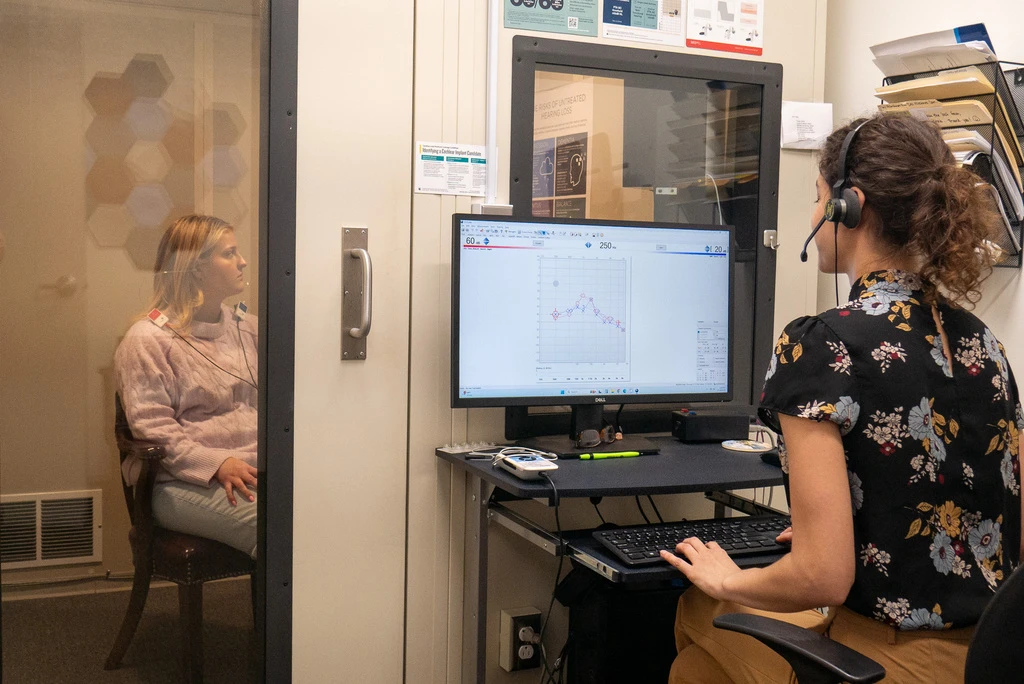
- Balance disorders often come from the inner ear and the vestibular system.
- Dizziness, vertigo, and imbalance can be treated once the cause is identified.
- Audiologists play a key role in testing, diagnosis, and coordinated care. Rose Audiology provides hearing and balance evaluations in Chantilly, VA.
Balance disorders can affect how steady you feel when standing, walking, or moving your head. They can make everyday tasks feel harder and may even increase the risk of falls. At Rose Audiology, we help patients understand balance disorders and the vestibular system so they can feel more confident, safe, and supported.
Your balance depends on several parts of the body working together. When one part is not working well, you may notice dizziness, spinning, or unsteadiness. Understanding how balance works is the first step toward feeling better.
How Balance Works
Your sense of balance comes from three systems working together:
- The vestibular system (inner ear): This system detects head movement and helps keep your vision steady. Audiologists are trained and specialized in this system.
- Vision: Your eyes tell your brain where you are in space.
- Proprioception: Sensors in your muscles and joints tell your brain how your body is positioned.
When one system is off, the other systems have to work harder. This extra effort can lead to dizziness, imbalance, or fatigue.
What the Vestibular System Does
The vestibular system is located in the inner ear. It includes:
- Three semicircular canals, which sense head rotation
- Two otolith organs, which sense gravity and motion
These parts send constant signals to your brain so you can move, walk, and turn your head without losing balance.
The vestibular system also controls the vestibulo-ocular reflex (VOR). The VOR keeps your vision clear when your head moves. If the VOR is weak, you may feel like your vision bounces or blurs when you walk or turn your head.
Understanding Dizziness and Vertigo
Dizziness can feel different for different people:
- A feeling of being off or unsteady
- Floating or lightheadedness
- Trouble walking straight
Vertigo is a spinning sensation and is often linked to a vestibular problem.
Disequilibrium is a feeling of imbalance, especially when standing or walking.
These symptoms can feel scary and may affect confidence and daily activities.
A Common Balance Condition: BPPV
One common cause of vertigo is Benign Paroxysmal Positional Vertigo (BPPV). BPPV happens when tiny crystals in the inner ear move into the wrong place. This can cause short bursts of spinning with certain head movements.
The good news is that BPPV is highly treatable. Simple repositioning maneuvers, such as the Epley or Semont maneuver, can move the crystals back where they belong.
Why Balance Testing Matters
Dizziness can come from many places, including the inner ear, brain, vision system, or sensory system. Balance testing helps identify the exact cause so treatment can be targeted and effective.
Audiologists help determine whether symptoms come from the peripheral vestibular system, the central nervous system, or another source.
Vestibular Testing at Rose Audiology
Aside from providing hearing tests in Chantilly, VA, Rose Audiology also offers advanced vestibular testing, including:
- Videonystagmography (VNG): Measures eye movements to see if dizziness is coming from the inner ear or brain
- Video Head Impulse Test (vHIT): Tests all six semicircular canals and how well the VOR works during quick head movements
- cVEMP / oVEMP: Checks otolith organ function and the nerves that send balance signals to the brain
These results help us create a personalized care plan.
Hearing, Balance, and Fall Risk
Hearing and balance share pathways in the inner ear. Research shows adults with hearing loss are more likely to fall. Studies also show that consistent hearing aid use can lower fall risk by improving awareness and reducing mental strain.
Falls are a major health concern, especially for adults over 65. Preventing falls through hearing care and vestibular evaluation can support independence and long-term health.
The Audiologist’s Role in Balance Care
Audiologists are uniquely trained to evaluate both hearing and balance. They perform full balance testing, fit and verify hearing aids, and coordinate care with ENT doctors, neurologists, vestibular physical therapists, and primary care providers.
Through testing, counseling, and follow-up, audiologists help restore stability, clear vision with movement, and confidence in daily life.
Support for Balance Disorders at Rose Audiology
If you are experiencing dizziness, vertigo, or imbalance, help is available. Balance disorders do not have to control your life. At Rose Audiology, we provide thoughtful balance evaluations and coordinated care to help you feel steady and supported again.
If you have concerns about balance disorders, contact Rose Audiology to schedule an evaluation.