What Is Auditory Processing Disorder?
Auditory processing disorder occurs when the brain has difficulty interpreting sounds accurately, despite normal or near-normal hearing sensitivity. Individuals with APD may hear sounds clearly but struggle to understand speech, follow directions, or process information in noisy or fast-paced environments.
APD can affect children, adolescents, and adults, and symptoms may impact academic performance, work environments, and daily communication.
Signs That an APD Evaluation May Be Helpful
An auditory processing evaluation may be recommended if you or your child experiences:
- Difficulty understanding speech in background noise
- Trouble following multi-step directions
- Frequent requests for repetition
- Listening fatigue or difficulty staying focused during conversations
- Academic or work-related challenges related to listening
A comprehensive evaluation helps determine whether auditory processing differences may be contributing to these concerns.
Auditory Processing Evaluations at Rose Audiology
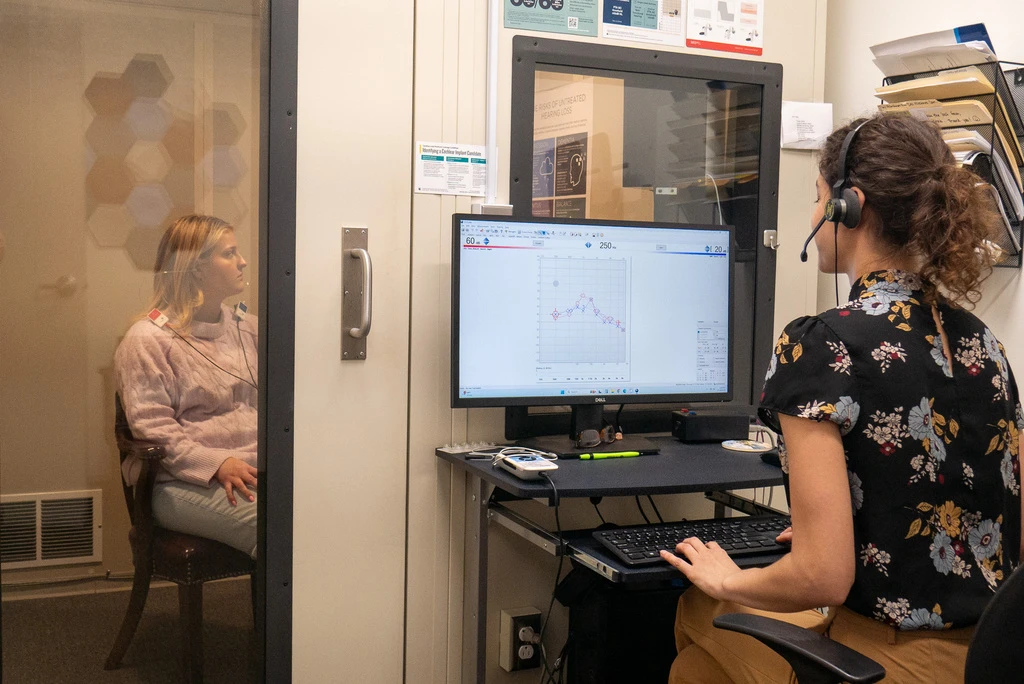
APD evaluations at Rose Audiology are thorough, unhurried, and tailored to the individual. The process begins with a detailed case history to understand listening challenges, educational or work demands, and daily environments.
The evaluation may include:
- Specialized auditory processing tests
- Speech-in-noise assessments
- Measures of auditory discrimination, memory, and processing speed
- Review of hearing sensitivity to rule out peripheral hearing loss
Results are explained clearly and compassionately, with time dedicated to answering questions and discussing what the findings mean in everyday life.
Treatment Options for Auditory Processing Disorder
Treatment plans for APD are highly individualized and based on current research and best-practice guidelines. At Rose Audiology, treatment focuses on improving functional listening skills and reducing communication strain.
Aural Rehabilitation
Aural rehabilitation addresses listening strategies, communication techniques, and counseling to support improved understanding and confidence in daily interactions.
Auditory Training
Structured auditory training programs, including LACE auditory training software, help strengthen listening skills such as speech understanding in noise, auditory attention, and processing speed.
Environmental and Communication Strategies
Recommendations may include classroom or workplace accommodations, communication strategies for families, and practical adjustments to support more successful listening.
Our Evidence-Based Approach
As an affiliate professor, Dr. Rose Buchbinder emphasizes evidence-based care in every APD evaluation and treatment plan. This means recommendations are grounded in research, tailored to individual needs, and adjusted over time as progress is made.
Our approach recognizes that auditory processing challenges are not one-size-fits-all, and care is paced to support each patient’s readiness and goals.
Frequently Asked Questions About Auditory Processing Disorder
Can someone have auditory processing disorder with normal hearing?
Yes, auditory processing disorder can occur even when hearing sensitivity is normal, as it affects how the brain interprets sound rather than how sound is detected.
Is auditory processing disorder only diagnosed in children?
APD can be identified in both children and adults, and evaluations are adapted based on age, needs, and listening demands.
Can auditory processing disorder improve with treatment?
With appropriate auditory training, strategies, and support, many individuals experience meaningful improvements in listening skills and communication confidence.
Schedule an Auditory Processing Evaluation in Chantilly, VA
If listening feels harder than it should, you do not have to navigate it alone.
Contact Rose Audiology today to schedule an auditory processing disorder evaluation in Chantilly, VA.
Take the next step toward clearer communication and personalized, evidence-based care!