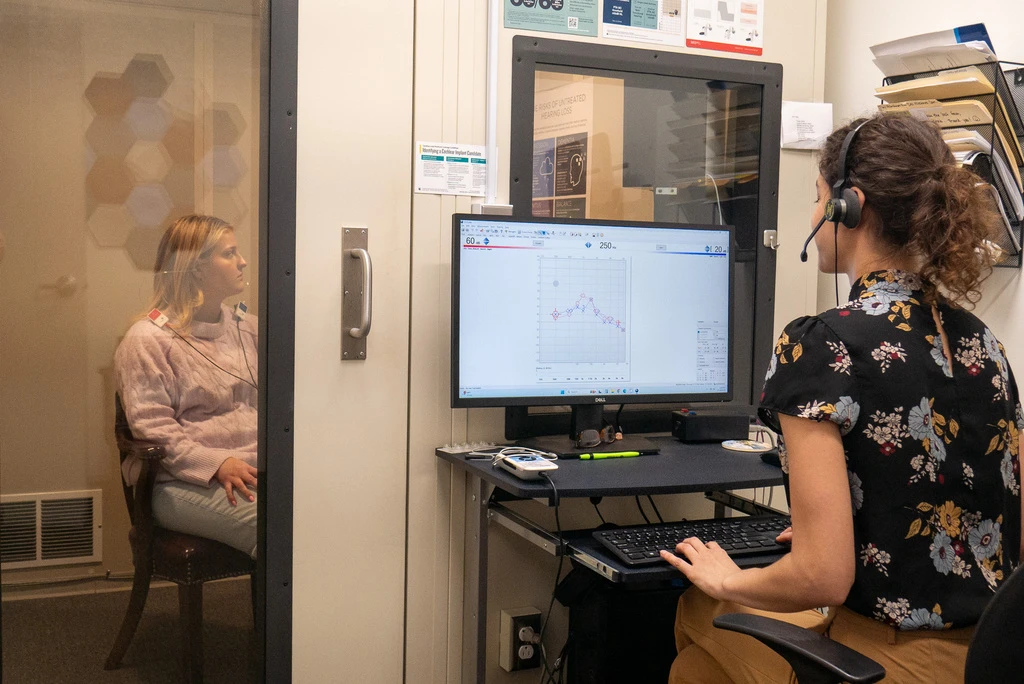
What Is Sensorineural Hearing Loss?
Sensorineural hearing loss occurs when there is a change in the inner ear or auditory nerve that affects how sound is transmitted to the brain. It is commonly associated with aging, noise exposure, genetics, or certain medical conditions.
This type of hearing loss often impacts clarity rather than volume alone, making it harder to understand speech (especially in background noise) even when sounds seem loud enough.
High-Frequency Hearing Loss: A Common Pattern
High-frequency hearing loss is the most common pattern seen in sensorineural hearing loss. It affects the higher-pitched sounds first, while lower-pitched sounds often remain clear for years. This is why many people say they can hear that someone is talking without being able to make out the words.
Everyday Signs of High-Frequency Hearing Loss
High-frequency hearing loss shows up in specific, recognizable ways:
- Struggling to hear children’s voices or other higher-pitched voices
- Missing consonant sounds like “s,” “f,” “th,” and “sh,” which makes words blur together
- Frequently asking people to repeat themselves, especially in group conversations
- Needing the TV or radio louder even when others say the volume is fine
- Hearing birds, doorbells, or phone rings less clearly than before
- Understanding conversation better one-on-one than in a group or noisy room
These signs often build gradually, which is why many people adjust to them without realizing how much they’re missing.
How the Test Shows It
Pure-tone testing measures how well you hear across a range of frequencies, from low-pitched sounds to high-pitched sounds. The results are plotted on an audiogram, a chart that shows your hearing thresholds at each frequency.
With high-frequency hearing loss, the audiogram typically shows a clear pattern: thresholds stay closer to normal at the lower frequencies, then drop off at the higher frequencies, usually in the 2,000 to 8,000 Hz range. This downward slope explains why speech can sound present but unclear. Vowel sounds carry more low-frequency energy and stay audible, while consonants carry high-frequency energy and get lost.
Speech-in-noise testing adds another layer of insight. Background noise tends to mask the same high-frequency sounds already affected by the hearing loss, which is why understanding speech in a restaurant or at a family gathering is often harder than a quiet one-on-one conversation suggests it should be.
At Rose Audiology, we walk through your audiogram with you and point out exactly where your hearing changes.
How Sensorineural Hearing Loss Is Evaluated
Evaluations at Rose Audiology begin with a detailed case history to understand your listening challenges, lifestyle, and concerns. Diagnostic testing is then performed to assess how your auditory system is functioning and how hearing loss may be affecting communication in real-world environments.
Your evaluation may include:
- Pure-tone and bone-conduction testing to identify the type and degree of hearing loss
- Speech testing, including speech-in-noise measures, to assess clarity in everyday listening situations
- A clear review of results and how they relate to your quality of life
Testing is unhurried and paired with thoughtful discussion, so you feel informed and supported throughout the process.
Treatment Options for Sensorineural Hearing Loss
While sensorineural hearing loss is typically permanent, there are many effective ways to manage its impact. Treatment plans at Rose Audiology are individualized and designed to support long-term success.
Hearing Technology
Hearing aids are often a primary treatment option and are selected based on your hearing profile, listening environments, and personal preferences. Fittings are verified using real ear measurements to support accuracy and comfort.
Aural Rehabilitation
Aural rehabilitation focuses on improving how you listen and communicate in real-life situations. This may include counseling, auditory training, and strategies to reduce listening effort and improve confidence.
Ongoing Counseling and Follow-Up
Understanding hearing loss is an important part of treatment. We spend time explaining what your diagnosis means, addressing emotional and lifestyle considerations, and adjusting care plans as your needs and readiness evolve.
What Makes Our Approach Different
At Rose Audiology, treatment goes beyond devices or test results. We recognize that hearing loss affects people differently and that readiness for treatment varies from person to person. Our care is built around:
- Evidence-based testing and verification
- Real-world listening assessments
- Empathic counseling and education
- Flexible follow-up plans tailored to your journey
Our goal is to support not just better hearing, but better connection and quality of life.
Frequently Asked Questions About Sensorineural Hearing Loss
Is sensorineural hearing loss permanent?
Sensorineural hearing loss is typically permanent, but treatment options such as hearing aids and aural rehabilitation can significantly improve communication and daily functioning.
How is sensorineural hearing loss different from other types of hearing loss?
Sensorineural hearing loss involves the inner ear or auditory nerve, while other types may be related to the ear canal or middle ear and may be medically treatable.
Can sensorineural hearing loss get worse over time?
Sensorineural hearing loss can change gradually over time, which is why regular monitoring and follow-up evaluations are important.
Schedule a Sensorineural Hearing Loss Evaluation in Chantilly, VA
If you are experiencing changes in hearing clarity or difficulty understanding speech, you do not have to navigate it alone.
Contact Rose Audiology today to schedule a sensorineural hearing loss evaluation in Chantilly, VA. Take the next step toward clearer communication and confident, personalized care.